Disclaimer: This tool is for research purposes only. Not for human consumption.
Proper Reconstitution Protocol
Peptides are highly delicate biological compounds. Proper handling and storage are essential for maintaining their stability, integrity, and research quality.
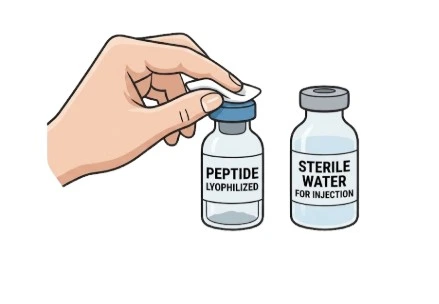
Clean The Vials
Remove the plastic caps from both the peptide vial and the bacteriostatic water vial. Using a fresh alcohol pad, thoroughly swab the rubber stoppers of both vials in a circular motion for at least 10 seconds. Allow the alcohol to dry completely before proceeding—this prevents contamination and ensures sterility
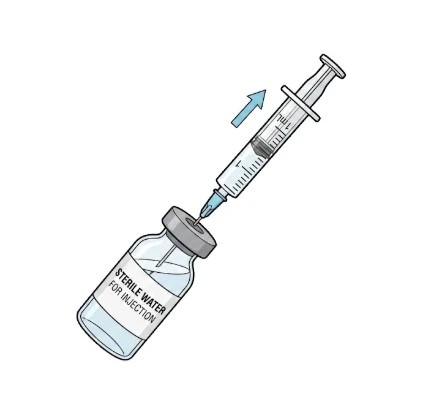
Draw Water
Draw the desired amount of bacteriostatic water into your syringe. Generally, 1-2ml is typical. More water = easier to measure small doses; less water = smaller injection volumes. Pull back the plunger slowly to avoid air bubbles. If bubbles appear, tap the syringe gently and push them out before proceeding.
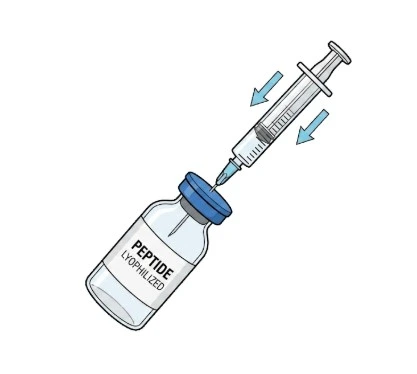
Inject Slowly
Insert the needle through the rubber stopper at a slight angle. Aim the needle towards the glass wall of the vial, NOT directly onto the powder—direct contact can damage the peptide structure. Inject the water very slowly, letting it trickle down the side of the vial. This gentle approach preserves peptide integrity.
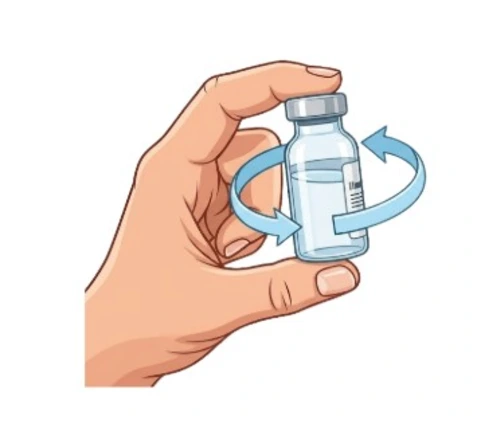
Do Not Shake
Never shake the vial vigorously—peptides are delicate protein chains that can denature (break apart) from aggressive agitation. Instead, gently swirl the vial in slow circular motions, or roll it between your palms. The powder should dissolve within 1-2 minutes of gentle swirling.
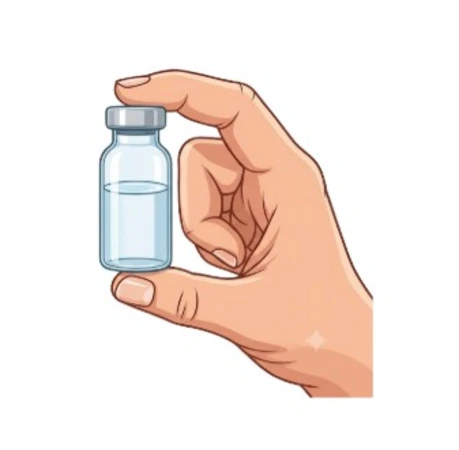
Let It Sit
If the solution appears cloudy or particles remain, place the vial upright in the refrigerator for 2-4 hours. The solution should become completely clear and colorless. Once reconstituted, store the vial refrigerated (36-46°F / 2-8°C) and use within 4-6 weeks for optimal potency.
Ready to Calculate?
Now that you understand the mixing process, accurately calculate your desired dosage with confidence.